OPERATION EPIC FURY AND WAR POWERS—LET THE POLITICS BEGIN
INTRODUCTION AND BACKGROUND
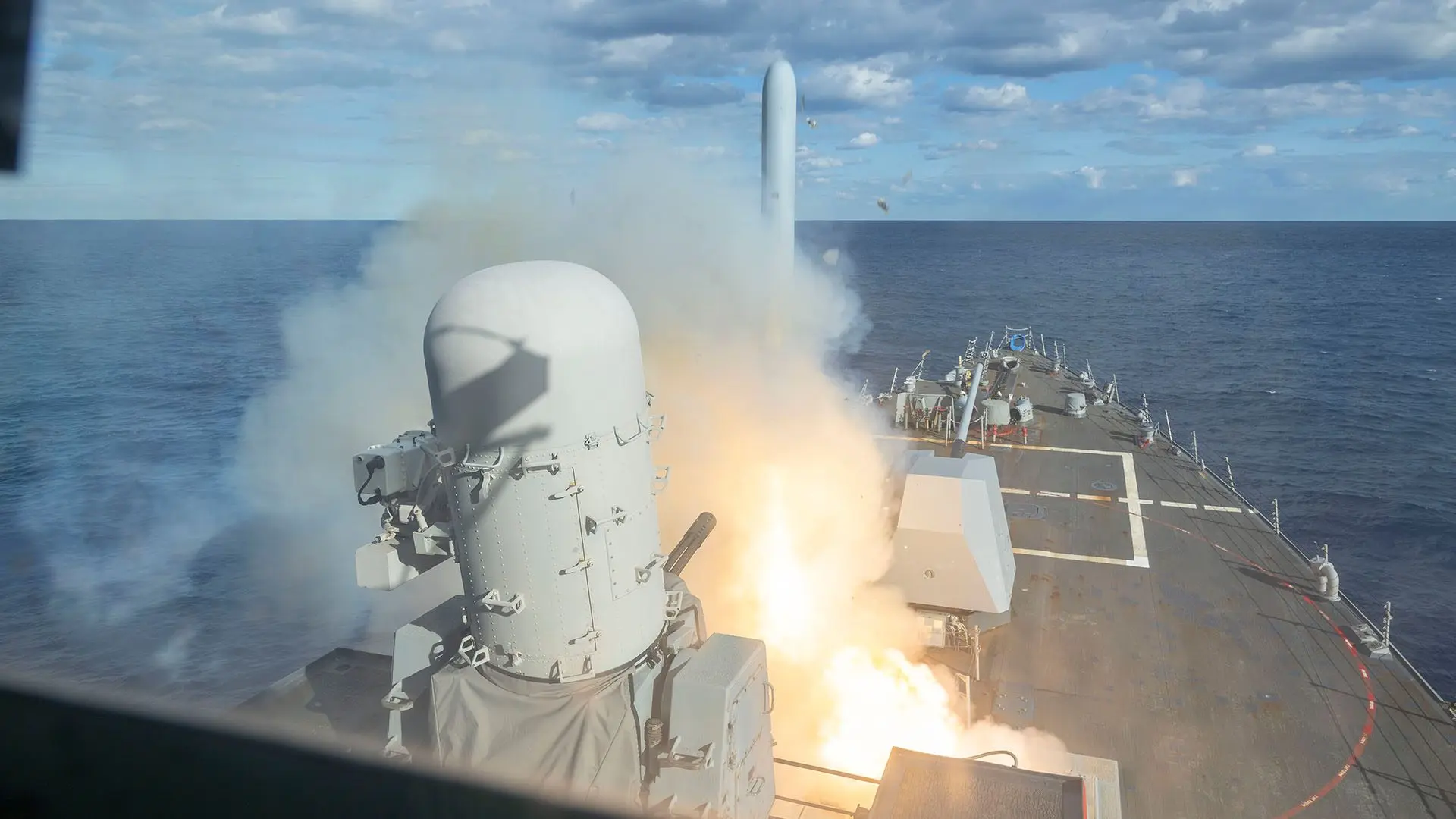
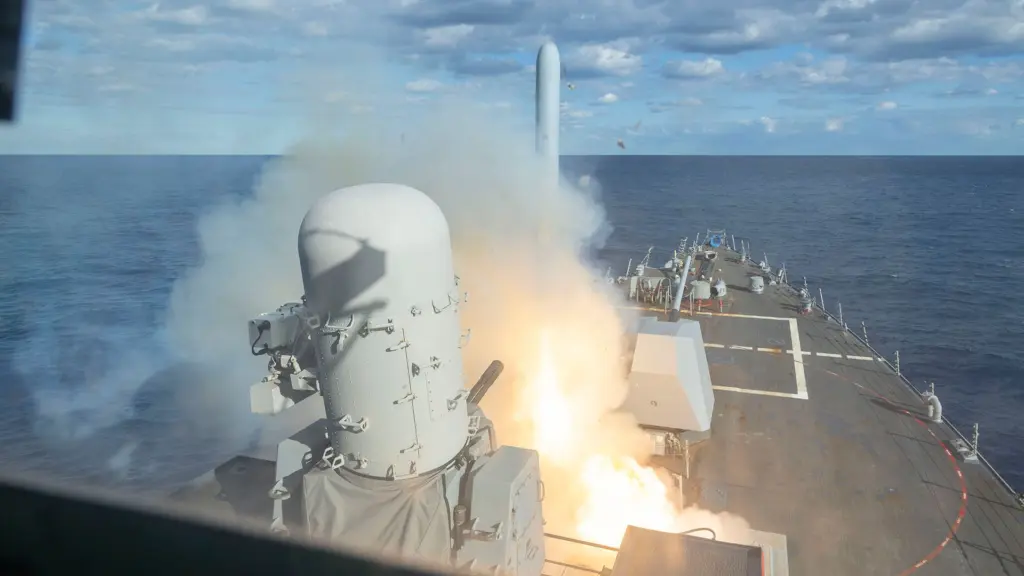
On February 28th, 2026, combined forces of the United States and Israel struck multiple targets in Iran. Admiral Brad Cooper, the Commander of CENTCOM, stated that the strikes began at 1:15 AM ET with the purpose of dismantling the regime’s “security apparatus, prioritizing locations that posed an imminent threat. These targets included Islamic Revolutionary Guard Corps command and control facilities, Iranian air defense capabilities, missile and drone launch sites, and military airfields.” At the time of this writing, several high-level officials were killed, including Ayatollah Khamenei, the “Supreme Leader.” This operation would put an end to Iran’s continued cheating and working under cover of China and Russia’s vetoes in the United Nations in the face of allegations of persistent violations of the disastrous UN Resolution 2231—the Joint Comprehensive Plan of Action (JCPOA) that Trump pulled us out of in 2018 given its fertile ground for circumvention. This action was predictably reversed by Biden, and Iran went to work enriching. More on that below, since it is important to understand the years of mischief on the part of Iran regarding its nuclear aspirations, coupled with funding and sponsoring terrorism through proxies such as Hamas, Hezbollah, and the Houthis, as well as other greatest hits. Immediately, House and Senate Democrats, banking on the low-information messaging it is using, screamed that this action was “illegal” and that they would attempt to go into emergency session to pass a resolution which will be worthless, say nothing that isn’t nakedly political (We hate Trump), which resolution will be rapidly vetoed by the Commander in Chief, the President. For over 200 years, Presidents have used military force to achieve foreign policy objectives without Congressional declarations of war. Congress has issued such declarations only eleven (11) times in five (5) wars since 1812. Use of our military has also occurred in accordance with Authorizations for Use of Military Force (AUMFs), short of full declarations by Congress, but much of our foreign policy utilizing military force numbers in the hundreds without either. It is this “historical gloss” and precedent that has led to the Office of Legal Counsel, particularly in the Clinton and Obama administrations, to clearly opine that the President is the Commander in Chief of the Armed Forces and may introduce military forces into theater without specific Congressional action. This is the law, and they know it. They don’t care—they hate Trump. Professor John Yoo, writing on the Declare War Clause in the Heritage Guide to the Constitution, supports this “Presidential View” of Article II Commander in Chief authority:
“Under this approach, the Declare War Clause gives Congress the power to define the legal state of relations with another country under international law. A declaration of war, originally understood, triggered certain rights, privileges, and protections under the laws of war but was not a prerequisite for engaging in hostilities. This view relies on Article II, which vests the ‘executive Power in the President and designates him as “Commander in Chief of the Army and Navy of the United States.'”
Congress has oversight authority, the power of the purse, as well as impeachment authority. Its decision to continue to appropriate funds for “undeclared” involvement in military actions abroad has been seen as a tacit authorization for the action itself in the first instance. Congress’s “declare war” authority appears at Article I, Section 8, Clause 11.
IRAN IS A ROGUE NATION GUIDED BY A DETERMINATION TO BE THE DOMINANT POWER IN THE MIDDLE EAST AND TO DECLARE A CALIPHATE WHILE DESTROYING ISRAEL AS WELL AS OUR PRESENCE THERE
For years Iran has directly and by proxy killed hundreds if not thousands of Americans after its Revolution in 1979. In 1983, it started with the October bombing of the Marine barracks in Lebanon. 241 of my shipmates were killed when a truck bomb detonated. Iran and Hezbollah were clearly responsible. I deployed there in the aftermath as a Lieutenant in the Navy Judge Advocate’s Corps and will never forget it. I shared a C-141 on the way home with a Marine fact-finding team; at their feet were the records of the dead. Forgive me for a bit of bias, but the treachery of this act and many others set the stage for a policy on the part of Iran to undermine and destroy. In Iraq our military suffered serious casualties from Iranian operatives and munitions. “Death to America” and “Death to Israel” were not hollow populist pronouncements. It was policy. Perhaps no more.
President Obama placed the United States as a signatory to the JCPOA discussed above. The following is part of a Congressional Research Service (CRS) analysis at Congress.gov on “Iran’s Nuclear Program and UN Sanctions Reimposition”:
“The JCPOA, finalized in July 2015 by Iran and China, France, Germany, Russia, the United Kingdom, and the United States (collectively known as the P5+1), required Iran to implement constraints on its uranium enrichment and heavy water nuclear reactor programs, as well as allow the International Atomic Energy Agency (IAEA) to monitor Tehran’s compliance with the agreement. These programs have caused international concern because they could produce fissile material for use in nuclear weapons.
Pursuant to the JCPOA, Tehran received relief from sanctions imposed by the European Union, United Nations, and United States. On the agreement’s January 16, 2016, Implementation Day, the Security Council terminated the provisions of seven resolutions: 1696 (2006), 1737 (2006), 1747 (2007), 1803 (2008), 1835 (2008), 1929 (2010), and 2224 (2015). Resolutions 1737 (2006), 1747 (2007), 1803 (2008), and 1929 (2010) all imposed sanctions on Iran.
In May 2018, President Donald Trump issued a memorandum stating that the United States would no longer participate in the JCPOA and would reimpose sanctions that had been suspended pursuant to the agreement. Arguing that subsequent efforts by the remaining JCPOA participants, known as the ‘P4+1,’ were inadequate to sustain the agreement’s benefits for Iran, Tehran has undertaken some nuclear activities that exceed JCPOA-mandated limits.”
President Trump was not wrong, as concerns from the International Atomic Energy Agency as well as EU members sounded the alarm. The following is from another CRS paper on Iran’s actions after the JCPOA regarding undeclared nuclear material:
“A March 3, 2020, report from IAEA Director General Grossi to the agency’s Board of Governors states that the IAEA has ‘identified a number of questions related to possible undeclared nuclear material and nuclear-related activities’ that had taken place at three undeclared Iranian locations. Beginning in November 2019, IAEA reports have detailed what Director General Grossi has described as “possible undeclared nuclear material and nuclear-related activities” in Iran. Specifically, IAEA inspectors have detected anthropogenic uranium particles at three undeclared Iranian locations. Pursuant to Iran’s comprehensive safeguards agreement and additional protocol, the agency has requested information about these activities, as well as access to these locations.
In a March 4, 2020, press interview, Grossi explained that ‘[t]he fact that we found traces (of uranium) is very important. That means there is the possibility of nuclear activities and material that are not under international supervision and about which we know not the origin or the intent.’ A June 2020 report from Director General Grossi explained that Tehran’s inadequate cooperation with the IAEA was ‘adversely affecting the Agency’s ability to clarify and resolve the questions’ raised by the IAEA’s findings described above. The IAEA Board of Governors adopted a resolution later that month calling on Iran ‘to fully cooperate with the Agency and satisfy the Agency’s requests without any further delay, including by providing prompt access to the locations specified by the Agency.’ This resolution does not contain a formal finding of noncompliance.
On June 12, 2025, the IAEA Board of Governors adopted a resolution (GOV 2025/38) finding that Iran’s failure to cooperate fully with the IAEA investigation described above ‘constitutes non-compliance with’ Tehran’s ‘obligations under its’ IAEA safeguards agreement ‘in the context of Article XII.C of the Agency’s Statute.'”
In response to this resolution, the AEOI (Atomic Energy Organization of Iran) and Iran’s Foreign Ministry announced on June 12 that the AEOI President had “issued necessary directives for launching a new enrichment facility in a secure location” and for “replacing first-generation centrifuges” at the Fordow enrichment facility with “advanced sixth-generation machines.”
The June 2025 Resolution of the IAEA Board also alleged with strong evidence:
“The draft for Thursday’s resolution highlights serious and growing concerns since at least 2019 that Iran had failed to cooperate fully with the UN agency’s inspectors.
Tehran has ‘repeatedly’ been unable to explain and demonstrate that its nuclear material was not being diverted for further enrichment for military use, the draft text maintains.
Iran has also failed to provide the UN agency with “technically credible explanations for the presence of [man-made] uranium particles” at undeclared locations in Varamin, Marivan and Turquzabad, it continues.
‘Unfortunately, Iran has repeatedly either not answered, or not provided technically credible answers to, the agency’s questions,’ IAEA chief Grossi said on Monday. ‘It has also sought to sanitize the locations, which has impeded Agency verification activities.’
According to Mr. Grossi, Tehran has stockpiled 400 kilogrammes of highly enriched uranium.”
After this statement and based upon solid intelligence gathered by our CIA and Israel’s Mossad, attacks known as Operation Midnight Hammer commenced on June 22nd, 2025, which apparently hit these enrichment mechanisms and sites en masse. The operation was successful. The intelligence assessments were alarming and contended that Iran had over sixty (60) percent of what it needed for weapons-grade material. This, coupled with a ballistic missile program that allowed for a potential strike into Europe, raised alarms among the nations of France, Germany, and the UK such that it was determined that they (the E3) would seek snapback of the sanctions and ultimate reimposition. On August 28, 2025, the E3 invoked the snapback mechanism, which resulted in the sanctions’ reimposition on September 27, 2025. Secretary of State Rubio applauded the measure. Russia and China objected. The 2025 invocation of snapback not only reimposes previously terminated sanctions but also extends them, and Iran’s nuclear program as a subject of Security Council consideration, indefinitely. Iran, in Oman, never said the magic words, stalled and remained committed to obtaining a nuclear weapon. Fast forward.
THE UNITED STATES’ EPIC FURY AND ISRAEL’S ROARING LION
The undeniable evidence that Iran was stalling in connection with the talks in Oman to receive rearmament from China and Russia after Midnight Hammer, as well as the widespread protests against the regime, weighed in favor of action over the gutless UN and IAEA handwringing over Iran’s gaming them since 2015. These strikes are not only designed to remove the existing regime but also to remove the ability of Iran to sponsor terrorism, close the economic lanes of commerce for oil and gas, and to remove its ability to use ballistic missiles to launch nuclear weapons or conventional weapons well beyond the Middle East. The world order, except for the usual suspects of Russia and China, did not want a regime led by a religious fanatic to have access to the means of such destruction.
THE UNITED STATES OPERATION WAS CLEARLY LEGAL WITH SIGNIFICANT HISTORIC PRECEDENT, AND THE WAR POWERS RESOLUTION IS UNCONSTITUTIONAL BUT HAS AVOIDED ATTEMPTS AT REPEAL
For the purposes of this piece, I do not advocate the political wisdom of regime change and its history of failure. Iran does not need to become another Libya, Iraq, or Syria, and it is hoped that there will be some regime in place that rejects the destruction of Israel and the export of destabilization in the region by proxy. The President’s actions, though lawful, do not avoid the political accountability that the Founders knew would be a further check on overreach. Time will tell. The War Powers Resolution, which appears HERE, was passed in November 1973 as a response to Nixon’s attempt to interdict NVA supply lines and refitting areas in Laos and Cambodia through bombing and troop insertions. Every President since its enactment has considered it a violation of and an encroachment upon the Article II authority of the Office of President as well as his well-settled foreign affairs responsibilities. Trump’s actions are well within these parameters. It passed over Nixon’s veto given the political sentiments at the time. Its mandate that troops be withdrawn after an arbitrary sixty (60) days is contrary to Article II authority as well. The following is from the Bill of Rights Institute:
“By 1973, all American troops had left Vietnam, and the Senate Armed Service Committee had begun hearings on the secret bombings in Cambodia. Congress ordered an immediate end to the bombing raids.
At this same time, Congress also drew up the War Powers Resolution. The Resolution required the President to consult Congress before the start of hostilities, and report regularly on the deployment of US troops. Further, the President would have to withdraw forces within sixty days if Congress has not declared war or authorized the use of force. When it came to his desk, Nixon vetoed the War Powers Resolution. In his veto message, he wrote that the Resolution “would attempt to take away, by a mere legislative act, authorities which the President has properly exercised under the Constitution for almost 200 years … The only way in which the constitutional powers of a branch of the Government can be altered is by amending the Constitution…” He noted that Congress already had a constitutional check on the President’s power with its appropriations (funding) power. Congress passed the law over President Nixon’s veto with the necessary two-thirds vote in both Houses.”
OBAMA’S AND CLINTON’S OFFICE OF LEGAL COUNSEL PROVIDE MORE THAN SUFFICIENT LEGAL COVER FOR THIS ACTION BASED ON THEIR ARTICLE II ACTIONS
The War Powers Resolution does not limit the introduction of hostilities to an “imminent threat”; it also states “introduction into hostilities.” Apparently without reading the text, political hacks, like Senators Kaine and Warren, state, “There was no imminent threat from Iran.” The President can act in the national interest even without imminent threat to the homeland with strong historical precedent. The Administration claims, however, that there was an imminent threat, as Iran is still engaged in attempts to reboot enrichment. Certainly, obtaining enough fissionable material for a weapon does create an imminent threat, especially if Iran moved its centrifuges in anticipation of operations like Midnight Hammer. In addition, there was intelligence that the regime leaders as well as the Revolutionary Guard were meeting in Teheran on the morning of the 28th. There was nothing but stalling and blather in Oman. This was a war meeting. The United States and Israel acted, and to the extent that regime change was part of our joint objectives, the time to act was then and swiftly. No notification to Congress. We wouldn’t want Ilhan Omar to call the Iranian Embassy with a coded warning. No, I am not jesting. 48 regime members were killed.
Here are the smoking guns certainly paid forward by the current Office of Legal Counsel.
38 Op. O.L.C. 82 (2014), discussing Obama’s actions in Iraq well after the fall of Hussein:
“Targeted Airstrikes Against the Islamic State of Iraq and the Levant
The President had the constitutional authority to order targeted airstrikes in Iraq against the Islamic State of Iraq and the Levant without prior congressional authorization. The President had reasonably determined that these military operations would further sufficiently important national interests. A combination of three relevant national interests—protecting American lives and property; assisting an ally or strategic partner at its request; and protecting endangered populations against humanitarian atrocities, including possible genocide—supported the President’s constitutional authority to order the operations without prior congressional authorization. The anticipated nature, scope, and duration of the military operations did not rise to the level of a “war” within the meaning of the Declaration of War Clause. December 30, 2014
In our recent opinion concerning the President’s authority to conduct military operations in Libya, we explained in detail our framework for analyzing the President’s legal authority to use military force abroad without prior congressional authorization. See Authority to Use Military Force in Libya, 35 Op. O.L.C. 20, 27–33 (2011) (“Military Force in Libya”). As our Libya opinion explains, Attorneys General and this Office have consistently concluded that ‘”the President has the power to commit United States troops abroad,” as well as to “take military action,” “for the purpose of protecting important national interests,” even without specific prior authorization from Congress.’ Id. at 27–28 (quoting Authority to Use United States Military Forces in Somalia, 16 Op. O.L.C. 6, 9 (1992) (‘Military Forces in Somalia’). This power is rooted in the President’s constitutional authority as Chief Executive and Commander in Chief of the armed forces. U.S. Const. art. II, § 1, cl. 1; id. § 2, cl. 1. The assignment of the ‘executive Power’ to the President has, over time, been understood to give him the ‘vast share of responsibility for the conduct of our foreign relations,’ Am. Ins. Ass’n v. Garamendi, 539 U.S. 396, 414 (2003) (quoting Youngstown Sheet & Tube Co. v. Sawyer, 343 U.S. 579, 610–11 (1952) (Frankfurter, J., concurring)), as well as ‘independent authority “in the areas of foreign policy and national security,”‘ id. at 429 (quoting Haig v. Agee, 453 U.S. 280, 291 (1981)). And the President’s authority as Commander in Chief gives him the authority to superintend and direct the movements of the military forces placed at his command. See Loving v. United States, 517 U.S. 748, 772 (1996); Fleming v. Page, 50 U.S. (9 How.) 603, 615 (1850). “The President also holds an ‘implicit advantage … over the legislature under our constitutional scheme in situations calling for immediate action,’ because of his ability to act and respond to developing situations with greater facility and speed. Presidential Power to Use the Armed Forces Abroad Without Statutory Authorization, 4A Op. O.L.C. 185, 187 (1980) (‘Presidential Power’); see also Presidential Authority to Permit Incursion Into Communist Sanctuaries in the Cambodia-Vietnam Border Area, 1 Op. O.L.C. Supp. 313, 314 (1970) (noting that the Framers ‘recognized the need for quick executive response to rapidly developing international situations’). Presidents have exercised these authorities numerous times throughout the Nation’s history to deploy the armed forces abroad without either a declaration of war or other congressional authorization, beginning in the earliest days of the Republic many decades[,] and engaged in by Presidents of both parties, evidences the existence of broad constitutional power.’ Military Force in Libya, 35 Op. O.L.C. at 29–30 (internal quotation marks omitted); see also Proposed Deployment of United States Armed Forces into Bosnia, 19 Op. O.L.C. 327, 330–31 (1995) (‘Proposed Bosnia Deployment’) (noting that the ‘scope and limits’ of the President’s and Congress’s respective powers have been ‘clarified by 200 years of practice’).”
The Coup de grace, if you will, in the same Opinion:
“To be sure, the Constitution also gives Congress the power to ‘declare War,’ to provide for the common defense, and to raise, support, maintain, and make rules for the armed forces. U.S. Const. art. I, § 8, cls. 1, 11–14. These congressional powers may limit the President’s authority to initiate without prior congressional authorization a ‘prolonged and substantial’ ‘planned military engagement that constitutes a “war” within the meaning of the Declaration of War Clause.’ Military Force in Libya, 35 Op. O.L.C. at 31. They may also permit Congress in certain respects to restrict how the President exercises his military authorities. See id. at 28. But ‘the historical practice of presidential military action without congressional approval precludes any suggestion that Congress’s authority to declare war covers every military engagement, however limited, that the President initiates.’ Id. at 31. Indeed, ‘Congress itself has implicitly recognized’ the President’s unilateral authority to initiate military engagements in the War Powers Resolution, which, by imposing reporting and other requirements on the President’s introduction of armed forces into hostilities or imminent hostilities absent a congressional declaration of war, ‘recognizes and presupposes the existence of unilateral presidential authority to deploy armed forces’ into such situations.”
CONCLUSION
Members of our military have lost their lives, and others have been wounded in Epic Fury. This has occurred in the context of other such assertions of military power by Presidents acting as Commanders in Chief since Jefferson’s actions against the Barbary Pirates. They are heroes who serve with honor. In the post-1973 arena, Presidents have unilaterally authorized military action in Iran, Bosnia, Panama, Syria, Afghanistan, Lebanon, Iraq (even beyond the 2002 AUMF), and Somalia. President Carter did not consult with Congress before the disastrous Desert One rescue attempt of our hostages taken in Iran in 1979. Bush, Clinton, Obama, and Reagan, as well as every President since, have, with or without Congressional authorization, engaged in foreign policy through the introduction of our military. The implications for the region in the aftermath of Epic Fury remain to be seen. If Iran is defanged and wishes to talk, we should. We will be able to police their nuclear and ICBM designs with force and at will. The religious fanaticism of the now deceased Ayatollah should never manifest into a foreign policy of terror and use of proxies again to control the Middle East, destroy Israel, and spread a caliphate mentality into its neighbors. Saudi Arabia and the Gulf States all wish to enjoy the prosperity of the future through economic and technical progress for the good of their people. Unless Iran joins the world order in a constructive way, it will see more Epic Furies.
Mike Imprevento
March 2nd, 2026