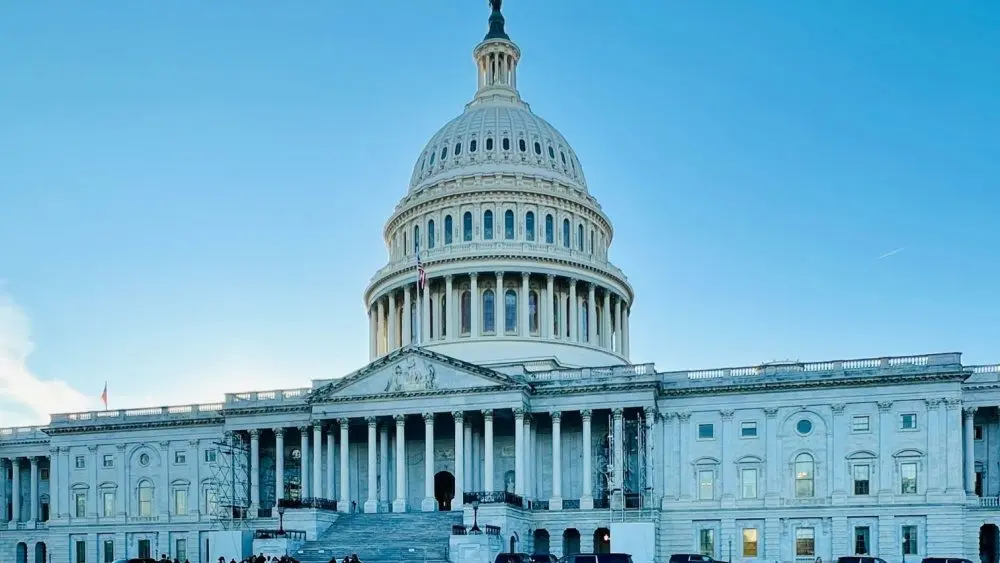
The House narrowly approved a sweeping spending package Tuesday to bring an end to the partial government shutdown, sending the legislation to President Donald Trump, who has said he will sign it without delay. The bill passed by a 217–214 vote after a tense day of negotiations and procedural hurdles.
Speaker Mike Johnson faced a razor-thin margin and could afford to lose only one Republican vote. The procedural vote to advance the bill was delayed and held open for nearly 45 minutes as GOP leaders worked to win over holdouts, including Rep. John Rose of Tennessee, who briefly opposed the measure over frustrations that the Senate had not acted on the SAVE Act, a proposal requiring proof of citizenship to vote. Rose ultimately reversed his vote, allowing the bill to move forward. Democratic leaders, including Minority Leader Hakeem Jeffries, voted against the final package, despite some members quietly supporting it. Jeffries had earlier made clear Democrats would not help fast-track the bill, saying his caucus held “a variety of perspectives.”
The legislation restores funding for most federal agencies through the end of the fiscal year on Sept. 30, including the Pentagon and the Departments of Education, Treasury, Labor, and State. However, funding for the Department of Homeland Security is only extended for two weeks, setting a new deadline of Feb. 13 and triggering a high-stakes negotiation over immigration enforcement policy.
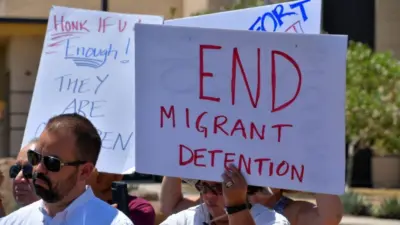
Democrats are using the short-term DHS extension to press for changes to Immigration and Customs Enforcement and Customs and Border Protection operations, following the fatal shooting of two Americans, Renee Good and Alex Pretti, during a federal law enforcement incident in Minneapolis. The incident sparked national outrage and intensified calls for reform.
Rep. Rosa DeLauro, D-Conn., the top Democratic negotiator on funding, supported the bill, arguing that separating DHS allowed Congress to protect broad bipartisan agreements on other agencies while zeroing in on immigration enforcement issues. “I believe this is an opportunity to isolate DHS and go at it, hammer and tongs, tooth and nail — whatever phrase you want to use,” she said, adding that lawmakers should now focus exclusively on DHS over the next 10 days.
The Senate passed the same package last Friday by a wide 71–29 margin, and President Trump helped push it through the House by urging Republicans to back the bill as written. In a message to GOP holdouts earlier in the week, Trump warned, “There can be NO CHANGES at this time.”
The agreement separating DHS from the other funding bills was negotiated by Senate Minority Leader Chuck Schumer and the White House. While DHS agencies such as TSA, the Coast Guard, FEMA, and Customs and Border Protection would be affected by a lapse in funding, ICE operations would continue regardless, after receiving $75 billion through the previously passed “Big Beautiful Bill.” Securing a longer-term DHS agreement remains uncertain. Rep. Robert Aderholt, R-Ala., warned that deep divisions remain. “There are vast differences,” he said, predicting Congress may need another short-term extension, potentially pushing the deadline into March.
Editorial credit: JTTucker / Shutterstock.com