THE MAGAZINE CAPACITY LAWS COLLIDE WITH THE SECOND AMENDMENT, AND THE VIRGINIA GENERAL ASSEMBLY DOESN’T CARE
INTRODUCTION
On March 5th, in an unlikely decision from the District of Columbia Court of Appeals, the former home of Merrick Garland, the District’s arbitrary and unconstitutional magazine capacity limit of 10 rounds was declared unconstitutional and in contravention of the Second Amendment. The cases of District of Columbia v. Heller, 554 U.S. 570 (2008), and New York State Rifle and Pistol Association, Inc. v. Bruen, 597 U.S. 1 (2022), which held that the Second Amendment was an individual right and that the right to bear arms for self-defense outside the home was also protected by the Second Amendment, respectively, were instructive and binding precedents. Both rights were held to be binding on the states pursuant to the Fourteenth Amendment, as held in McDonald v. Chicago, 561 U.S. 742 (2010). The case, Benson v. District of Columbia, Record Number 23-CF-0514, involved the prosecution of Mr. Benson for the horrible crime of having a thirty (30) round magazine in his “unregistered” semi-automatic firearm. This was a status crime; the weapon was not used in a crime—mere having it was the crime. We explore the decision below.
THE BENSON COURT REVERSES THE CONVICTIONS AND HOLDS THAT THE MAGAZINE LIMIT IS UNCONSTITUTIONAL
The court held that magazines of all capacities are “arms,” a critical holding that implicates the Bruen and Heller tests for Second Amendment protection.
“The threshold question is whether 11+ magazines are ‘bearable arms’ covered by the Second Amendment’s plain text. Bruen, 597 U.S. at 28 (quoting Heller, 554 U.S. at 582). That is, are they something that a person might ‘take into his hands’ to use ‘in wrath to cast at or strike another,’ Heller, 554 U.S. at 581, or do they otherwise ‘facilitate armed self-defense’? Bruen, 597 U.S. at 28. The answer to each of those questions is ‘yes.’ An 11+ magazine facilitates armed self-defense because it is used to load a firearm, and it then feeds successive cartridges into the gun’s firing chamber as a person shoots—a particularly essential feature for semiautomatic guns—eliminating any need to manually reload the gun until the magazine is spent and itself needs to be reloaded. Ass’n of N.J. Rifle & Pistol Clubs, Inc. v. Att’y Gen. N.J., 910 F.3d 106, 116 (3d Cir. 2018) (‘Because magazines feed ammunition into certain guns, and ammunition is necessary for such a gun to function as intended, magazines are “arms” within the meaning of the Second Amendment’). That can come in handy in fending off an attacker, particularly if you need to fire a second shot. It is also helpful for getting some target practice in, either for entertainment’s sake or to improve one’s marksmanship and ability to defend themselves, without having to manually reload the weapon after each shot. Magazines of all capacities are thus arms covered by the plain text of the Second Amendment.”
The Court in Benson focused on the widespread use of large-capacity magazines for lawful purposes such as recreation and self-defense, squarely implicating the Bruen and Heller core underpinnings of the right:
“Our analysis proceeds in four parts. First, we detail the relevant Second Amendment framework, with a focus on the Supreme Court’s opinions in Heller, Bruen, and United States v. Rahimi, 602 U.S. 680 (2024). Second, we apply that framework to the parties’ three central disputes: (1) whether 11+ magazines are arms protected by the Second Amendment; (2) the extent to which 11+ magazines are in ‘common use’ for lawful purposes, like self-defense; and (3) whether there is any history and tradition of banning similar arms. To preview our answers to those central questions, they are that 11+ magazines are unquestionably arms, they are in not only common but ubiquitous use for lawful purposes, and there is no history or tradition of blanket bans on arms in such common use, so that the District’s magazine capacity ban violates the Second Amendment…”
Holding that magazines with a capacity of more than ten (10) rounds were therefore protected, the convictions were also reversed.
“…because Benson could not have registered, procured a license to carry, or lawfully possessed ammunition for his firearm given that it was equipped with a magazine capable of holding more than 10 rounds, we likewise reverse his convictions for possession of an unregistered firearm, carrying a pistol without a license, and unlawful possession of ammunition”
THE VIRGINIA GENERAL ASSEMBLY IS POISED TO PASS A MAGAZINE CAPACITY LIMIT THAT MAY WELL BECOME LAW AND SHOULD FAIL TO PASS CONSTITUTIONAL SCRUTINY UPON THE SAME REASONING
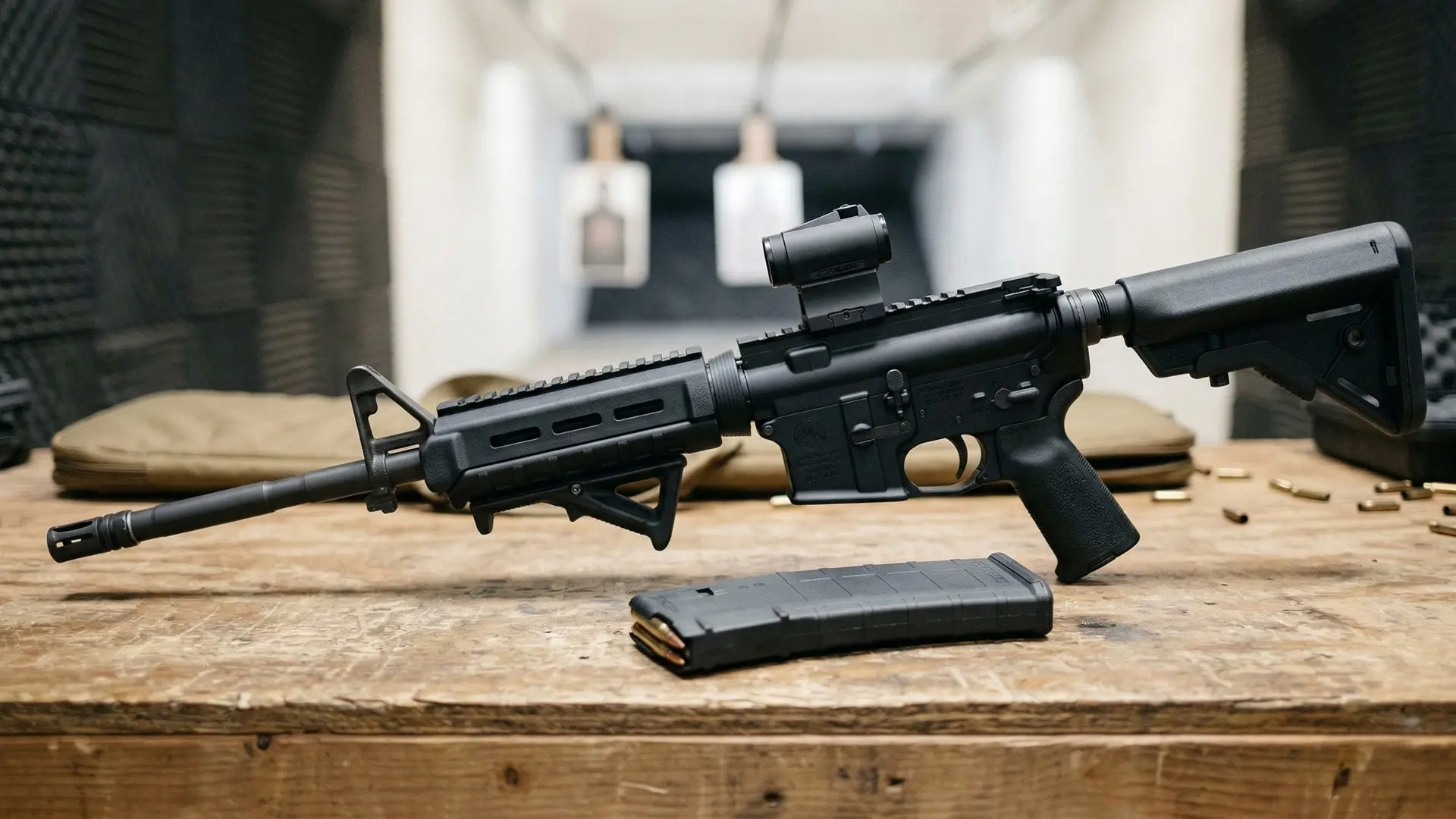
On March 6th, 2026, the Virginia Senate passed, until this week, consideration in crossover of the proposed legislation set forth below. To try to wordsmith the provision to pass constitutional scrutiny, the proponent Del. Dan Helmer (D-Fairfax), now running for Congress and the potential beneficiary of the redistricting mischief the Democrats are pulling, changed the proposed capacity limit of “feeding devices” from ten (10) to fifteen (15) rounds and made the possession of a non-complying “feeding device” a Class 1 Misdemeanor but only if purchased after July 1st, 2026. This is squarely aimed at the AR-15 series of rifles and any semiautomatic rifle which commonly utilizes thirty (30) round magazines. In the semiautomatic pistol arena, there are scores of such pistols sold with 17-20+ round magazines. This attempt to salvage a previous, even more draconian version of this bill will fail if the United States Supreme Court stops kicking the can down the road on laws calculated to erode the core self-defense mission of the Second Amendment. The current version of the bill follows:
Ҥ 18.2-309.1. Sale, transfer, etc., of certain firearms magazines prohibited; penalty.
- As used in this section: ‘Federal firearms licensee’ means the same as that term is defined in § 18.2-287.4:1. ‘Large capacity ammunition feeding device’ means a magazine, belt, drum, feed strip, or similar device that has a capacity of, or that can be readily restored or converted to accept, more than 15 rounds of ammunition but does not include an attached tubular device designed to accept and capable of operating only with .22 caliber rimfire ammunition.
- Any person who imports, sells, barters, transfers, or purchases a large capacity ammunition feeding device is guilty of a Class 1 misdemeanor.
- The provisions of this section shall not apply to the (i) manufacture by, transfer to, or possession by the Commonwealth, or a department, agency, or political subdivision of the Commonwealth, of a large capacity ammunition feeding device; (ii) transfer to or possession by a law-enforcement officer of a large capacity ammunition feeding device for purposes of law enforcement; (iii) possession of a large capacity ammunition feeding device by an individual who is retired from service with a law-enforcement agency and is not otherwise prohibited from receiving ammunition transferred to the individual by the law-enforcement agency upon his retirement; (iv) import of a large capacity ammunition feeding device by a person who lawfully purchased and possessed such large capacity ammunition feeding device prior to July 1, 2026; (v) possession of a large capacity ammunition feeding device that has been permanently modified such that it cannot accept more than 15 rounds of ammunition; (vi) the sale, barter, or transfer of a large capacity ammunition feeding device by a person who lawfully purchased and possessed such device prior to July 1, 2026, to a federal firearms licensee or any recipient outside of the Commonwealth who may lawfully possess such large capacity ammunition feeding device; or (vii) the import, sale, barter, transfer, purchase, or possession of a large capacity ammunition feeding device by a federal firearms licensee for the purpose of sale or transfer to any branch of the Armed Forces of the United States, to senior military colleges in the Commonwealth organized under 10 U.S.C. § 2111a(f), to a law-enforcement agency or officer, to another federal firearms licensee, or to a recipient outside the Commonwealth who may lawfully possess such large capacity ammunition feeding device.”
Huge inventories of twenty (20) and thirty (30) round magazines that are ubiquitous and in use by tens of thousands of Virginians (and millions of law-abiding gun owners nationwide) will be taken off retailer shelves and sold out of the Commonwealth if this garbage passes. Fifteen (15) round magazines for AR platforms and any handgun is an arbitrary limit. Many states have such bans over a certain round count for handguns, long guns, or both. Appellate courts are split on whether a magazine is an “arm” that is protected by the Second Amendment. Some have engaged in the fiction that ten (10) rounds available for self-defense in a carried firearm does not impair or even implicate the core self-defense underpinnings of the Second Amendment because “ten round bursts of fire in self-defense encounters are rare.” These varied interpretations of a fundamental right depending on where one resides in the United States must end.
THE SUPREME COURT HAS BEFORE IT A CASE WHICH WILL PUT THIS NONSENSE TO REST IF THEY ONLY AGREE TO HEAR IT
On Friday, March 6th, the Supreme Court supposedly considered whether to review the Ninth Circuit decision in Duncan v. Bonta, Record Number 25-198, which decision not only upheld California’s ten (10) round magazine limit for all weapons but had a dispossession clause that would call for confiscation as well as potential prosecution of any person in possession of a non-complying magazine. We await their decision. The Petition for a Writ of Certiorari by the appellants sets forth in its opening statement:
“This Court held in District of Columbia v. Heller, 554 U.S. 570 (2008), that states may not ban arms that ‘law-abiding citizens’ ‘typically possess[] … for lawful purposes.’ Id. at 625. And it reiterated in New York State Rifle & Pistol Association, Inc. v. Bruen, 597 U.S. 1 (2022), that ‘the Second Amendment protects the possession and use of weapons that are “in common use at the time.”’ Id. at 21 (quoting Heller, 554 U.S. at 627). California nonetheless persists in banning feeding devices capable of holding more than ten rounds of ammunition, even though tens of millions of law-abiding Americans have long lawfully owned hundreds of millions of these devices as integral components of legal firearms. Adding insult to injury, California’s ban applies retrospectively, requiring citizens to dispossess themselves of lawfully acquired property without any compensation from the state. …the Ninth Circuit not only doubled down on its pre-Bruen precedent, but reached the remarkable conclusion that California’s sweeping ban on common arms does not even implicate the Second Amendment. The questions presented are:
- Whether a ban on the possession of exceedingly common ammunition feeding devices violates the Second Amendment.
- Whether a law dispossessing citizens, without compensation, of property that they lawfully acquired and long possessed without incident violates the Takings Clause.”
This case and others percolating up to the Court must be reviewed. Jurisprudence resulting from this case, which is an extreme application of unlawful and unconstitutional police powers, would resolve these issues for the nation. The Court must stop allowing piecemeal erosion of a fundamental right in the states that have vowed to game Bruen and Heller if they can get away with it. Once and for all, we need law of the land rulings on:
- Are semiautomatic rifles such as the AR-15, commonly used in the United States for self-defense and recreation, protected by the Second Amendment?
- Are limits on magazine capacity imposed on magazines commonly used to feed handguns and rifles also in common use protected by the Second Amendment?
CONCLUSION
The Virginia General Assembly has gone into full gun-control crazy mode. It has done so because disarming law-abiding Virginians is a core platform issue for the Democrats in power. I have no doubt our Trojan Horse “No Really I am a Moderate” Governor will sign these bills in whatever form they wind up on her desk. Even if the Supreme Court decides to review the California case, Virginians will, in the interim before any decision, not be able to buy any handgun or long gun that is sold with a higher capacity magazine or the magazines themselves or be charged with a criminal offense that carries a year in jail. To criminalize lawful behavior is a shameful abuse of power. The Supreme Court must step in and resolve these fundamental issues. It is hard to believe the Second Amendment is as fundamental a right as the First Amendment. Imagine if a law were passed banning speech on a matter of public concern to fifteen (15) paragraphs of content or fifteen (15) minutes. Such limitations are permissible in Council meetings but imagine if this applied in society writ large?
Mike Imprevento
March 8th, 2026