PEACE TALKS HAVE FAILED—FOR NOW—THE CONTROL OF THE STRAITS OF HORMUZ AND CONTINUED HOSTILITIES IN THE REGION WILL FORCE CONGRESS’ HAND—WHAT NEXT?
INTRODUCTION
The sixty (60) day War Powers Resolution clock started on February 28th, 2026, when a joint operation, known in the United States as Epic Fury, commenced with the primary objective of permanently depriving Iran of both the ability to develop a nuclear weapon as well as the ability to deploy it by ballistic missile or other means. The IRGC, as well as their proxies, have all been declared terrorist organizations, and keeping such destructive powers out of those hands is in the direct interests of both the United States and Israel.
However, in this Republic, the war powers of the Legislative and Executive Branches are set forth in Article I and Article II of the Constitution. I discussed both in an earlier edition of this blog and will not repeat those points here. The purpose of this edition is to look at what comes next: a Joint Resolution removing our armed forces, intervention of the judiciary, Congress voting to stop new funding for such hostilities, or the unlikely passing of an Authorization for the Use of Military Force to use all measures to open the Straits of Hormuz with U.S. Naval power and combined forces and to ensure that nuclear material is destroyed or removed? Congress sees itself as the sole warmaking authority; history and the practices of several Commanders in Chief see clear Article II authority for the President to initiate hostilities in the national interest. This tension will now boil over as Iran has engaged in a political and economic war while losing the military conflict in a decisive way. The pending midterms have brought out the knives, as Democrats would rather see Trump and our military lose than the United States finally and decisively putting an end to Iran’s aggression.
It is interesting to note that several Presidents have stated, “Iran can never have a nuclear weapon.” In the 2024 Presidential election cycle, Kamala Harris stated that Iran was our number one geopolitical foe. When diplomacy fails, and it did here and as it did with the porous JCPOA, only measured military action can fulfill that political promise that our current President made and kept.
THE FAILURE OF PEACE TALKS IN PAKISTAN—YES, THE PAKISTAN THAT GAVE BIN LADEN A RETIREMENT VILLA—RENDERS UNCERTAIN WHAT HAPPENS NEXT AFTER THE CEASEFIRE EXPIRES
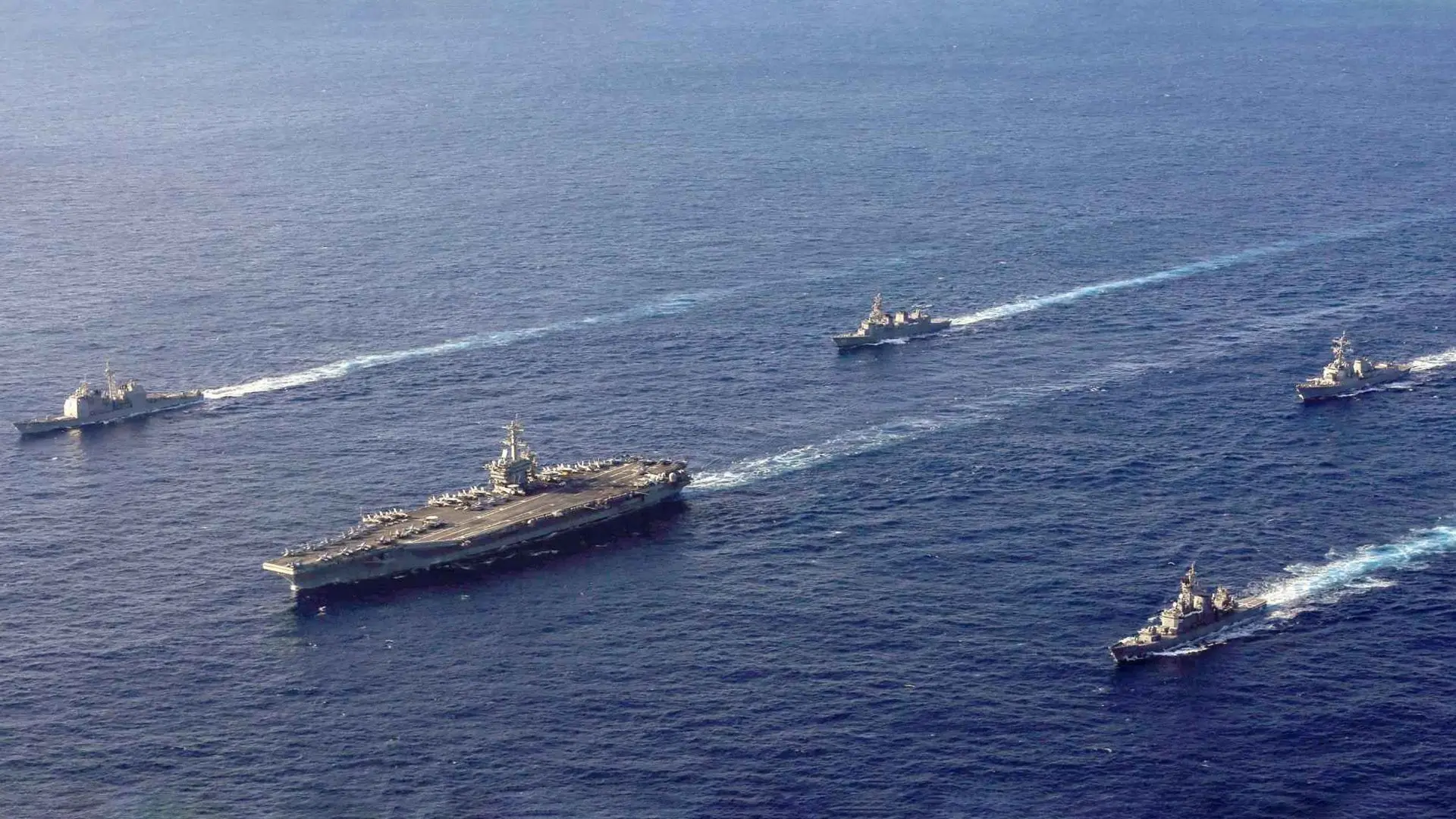
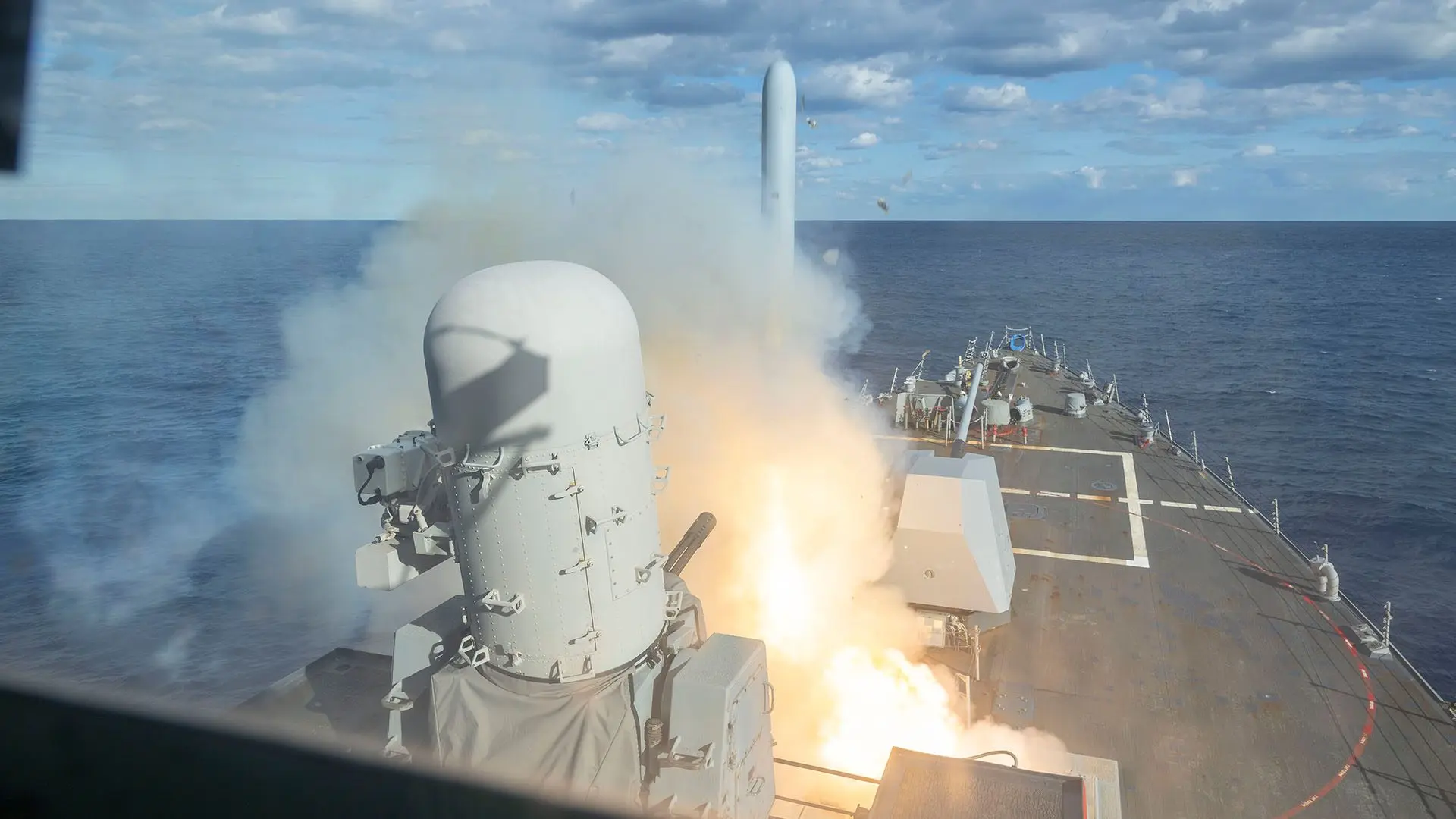
The President has declared a blockade of the Straits of Hormuz with United States naval assets. This will involve combined forces to engage in the interdiction of the still numerous IRGC swift boats as well as missile and drone launch facilities along the Strait. Mine clearing operations will be dangerous, as we saw during Operation Praying Mantis in the late 80s Tanker Wars of the Iran-Iraq conflict when the USS Samuel Roberts (FFG-58) struck a mine and nearly sank. A summary of that operation appears HERE. This will clearly involve an escalation of our mission, and Congress will have two options—voting to deny additional funding for such efforts or passing a Joint Resolution removing our forces from the region. In the event of forced removal, Iran will declare victory and will rebuild with Chinese and Russian assistance while continuing to obtain a nuclear weapon. In the past Congress has been reluctant to close the purse strings, and any Joint Resolution will certainly be met with an Executive veto. The votes for override do not exist in my opinion. Previous Resolutions in the House have failed on floor vote, and next week the Senate will again try to bring into debate another Resolution with a previous Senate effort failing to leave committee on a 53-47 vote. This Joint Resolution S.J. Res. 104 appears HERE.
IN THE EVENT OF PASSAGE AND INEVITABLE PRESIDENTIAL VETO DURING ACTIVE HOSTILITIES, DO NOT LOOK TO THE JUDICIARY TO INTERVENE
The following appears in a War Powers analysis at Congress.gov:
The power “To declare War” has long been construed to mean not only that Congress can formally take the nation into war, but also that it can authorize the use of the Armed Forces for military expeditions that may not amount to war. While a restrictive interpretation of the power “To declare War” is possible, for example, by viewing the Framers’ use of the verb “to declare” rather than “to make” as an indication of an intent to limit Congress’s ability to affect the course of a war once it is validly commenced, Congress’s other powers over the use of the military would likely fill any resulting void. In practice, courts have not sought to delineate the boundaries of each clause relating to war powers or identify gaps between them to find specific powers that are denied to Congress.
Debates relating to legislation regarded by some as interfering with the President’s Commander-in-Chief authority are frequently framed in terms of legislative meddling in military operations, but the line between regulating the Armed Forces and directing campaigns has proved elusive.
At the very heart of the unconstitutionality arguments that have plagued the War Powers Resolution since it was passed over President Nixon’s veto are the assertions that an arbitrary sixty (60) or ninety (90) day period for engagement into active hostilities, which then must cease, absent Congressional extension, is a direct infringement on the Commander in Chief’s authority to direct military engagements. Iran is playing the War Powers Act like a Stradivarius. Congress certainly has the Article I appropriations and funding authority to de facto limit military expenditures, but to do so outside of that plenary authority is why, on a bipartisan basis, Presidents have all but ignored it. The Supreme Court has long recognized the vast authority of the Executive as commander in Chief to direct military engagements and has been reluctant to inject itself into these issues, which are seen as nonjusticiable political questions subject to the political accountability of the popular vote and impeachment. The following is dictum from Hamdi v. Rumsfeld, 542 U.S. 507 (2004), which considered a different question regarding enemy combatants. Nonetheless, this is the long-standing view of the Court.
Without doubt, our Constitution recognizes that core strategic matters of warmaking belong in the hands of those who are best positioned and most politically accountable for making them. Department of Navy v. Egan, 484 U.S. 518, 530 (1988) (noting the reluctance of the courts “to intrude upon the authority of the Executive in military and national security affairs”); Youngstown Sheet & Tube Co. v. Sawyer, 343 U.S. 579, 587 (1952) (acknowledging “broad powers in military commanders engaged in day-to-day fighting in a theater of war”)
Ex parte Milligan, 71 U.S. (4 Wall.) 2, 139 (1866), is often cited on the issue of the shared but separate powers of Congress and the Chief Executive with regard to war powers.
Congress has the power not only to raise and support and govern armies but to declare war. It has, therefore, the power to provide by law for carrying on war. This power necessarily extends to all legislation essential to the prosecution of war with vigor and success, except such as interferes with the command of the forces and the conduct of campaigns. That power and duty belong to the President as commander-in-chief. Both these powers are derived from the Constitution, but neither is defined by that instrument. Their extent must be determined by their nature, and by the principles of our institutions. The power to make the necessary laws is in Congress; the power to execute in the President. Both powers imply many subordinate and auxiliary powers. Each includes all authorities essential to its due exercise. But neither can the President, in war more than in peace, intrude upon the proper authority of Congress, nor Congress upon the proper authority of the President. Both are servants of the people, whose will is expressed in the fundamental law. Congress cannot direct the conduct of campaigns….
Notwithstanding the foregoing, Congress still maintains authority for the removal of forces during hostilities, and the framework for such legislation appears below:
Procedures for the Consideration of a Bill or Joint Resolution Directing the Removal of U.S. Armed Forces (50 U.S.C. §1546a)
- The procedures relate only to consideration of measures in the Senate. There are no statutorily provided expedited procedures in the House.
- A bill or joint resolution may be introduced at any time that U.S. Armed Forces are engaged in hostilities outside of the United States and Congress has not declared war or otherwise authorized the action by statute.
- Upon introduction, a qualifying measure is referred to committee in routine fashion under the standing rules of the Senate.
- The committee of referral has 10 days of continuous session to report or may be subject to a motion to discharge on the floor that is debatable for one hour.
- Once the measure has been reported or the committee has been discharged from further consideration, it may be called up by a non-debatable motion to proceed.
- If the measure becomes the pending business of the Senate, it is debatable for 10 hours and “shall be amendable.”
- If the measure is vetoed by the President, consideration of the veto message is limited to 20 hours in the Senate.
Procedures for the Consideration of a Concurrent Resolution Directing the Removal of U.S. Armed Forces (50 U.S.C. §1546)
- A concurrent resolution may be introduced at any time that U.S. Armed Forces are engaged in hostilities outside of the United States and Congress has not declared war or otherwise authorized the action by statute.
- A qualifying concurrent resolution is referred to the Committee on Foreign Affairs in the House and the Committee on Foreign Relations in the Senate. The committee shall report the measure within 15 calendar days, unless the chamber “shall otherwise determine by the yeas and nays.”
- Once reported, the concurrent resolution “shall become the pending business” of the chamber and a vote on final passage shall occur within three calendar days thereafter (unless the chamber “shall otherwise determine by yeas and nays”).
- After passage in the first chamber, the concurrent resolution is transmitted to the other chamber and is subject to the same deadlines for action (15 calendar days for the committee to report and then three calendar days for a floor vote on final passage).
- In the event that there are differences in the measure passed by both chambers, “conferees shall be promptly appointed” and are directed to report within six calendar days. If conferees cannot reach agreement within 48 hours of being appointed, they shall report back in disagreement.
- The House and the Senate must both vote on the conference report within six calendar days after the conference report is filed.
Any such legislation is presented to the President, who may exercise a veto subject to override. The procedures for which are below:
Article I
Section 7 Legislation
- Clause 2 Role of President
Every Bill which shall have passed the House of Representatives and the Senate, shall, before it become a Law, be presented to the President of the United States; If he approve he shall sign it, but if not he shall return it, with his Objections to that House in which it shall have originated, who shall enter the Objections at large on their Journal, and proceed to reconsider it. If after such Reconsideration two thirds of that House shall agree to pass the Bill, it shall be sent, together with the Objections, to the other House, by which it shall likewise be reconsidered, and if approved by two thirds of that House, it shall become a Law. But in all such Cases the Votes of both Houses shall be determined by yeas and Nays, and the Names of the Persons voting for and against the Bill shall be entered on the Journal of each House respectively. If any Bill shall not be returned by the President within ten Days (Sundays excepted) after it shall have been presented to him, the Same shall be a Law, in like Manner as if he had signed it, unless the Congress by their Adjournment prevent its Return, in which Case it shall not be a Law.
CONCLUSION
The specter of the midterms has elevated politics over military and national security reality. Iran, like other foes in the past, is relying on fractures in the American political structure to win its cause for them. Outlasting the United States spells “victory.” The logistical issues of the Straits of Hormuz and the folly of allowing a terrorist nation to control twenty (20) percent of the world’s oil shipments mean we will be in theater for a longer period than contemplated and well beyond the arbitrary War Powers timelines. The world needs to reinforce the well-settled doctrine of “innocent passage” under international law and declare the waterway a free zone unencumbered by economic blackmail. Our Republic will respond with the elasticity built into our system, but the politics will go to the head of the line. China and the nations relying on the flow of oil need to ensure this for the common good, and they well know this regime should not be trusted with nuclear weapons. They need to rethink their veto of UN Resolutions keeping the Strait free of military encumbrance.
Mike Imprevento
April 13th, 2026